


Bottom Line Up Front: Local SEO Mistakes Franchise Brands Don’t Know They’re Making
For franchise brands, most local SEO problems aren’t really SEO problems. There are operational problems that show up in search. Here’s what tends to go wrong:
- Franchisees holding GBP access hostage (intentionally or not)
- Inconsistent or orphaned listings across Yelp, Apple Maps, aggregators, and beyond
- Reputation responses that go sideways without a system in place
- Location pages that technically exist but do nothing for local search
- GBP posts and local schema treated as optional extras instead of fundamentals
The good news is that all of it is fixable. But you have to be willing to do the work.
Picture a franchise with great branding, solid locations, a real marketing budget, and a corporate team that genuinely cares about digital presence. Now, picture their local search performance all over the place. Some locations are thriving. Others are basically invisible. A few have reviews that would make the PR team break out in hives.
When you dig in, the culprit is almost always more than a technical SEO problem. It’s how the organization is structured and what got ignored (or just never set up) as the brand scaled.
Multi-location orgs with distributed ownership are a different animal. What works for a single-location business, or even a company with a handful of corporate-owned stores, doesn’t automatically translate when you’re managing 50, 100, or 200+ locations where each owner has their own priorities, their own comfort with technology, and their own feelings about how much “corporate” should be in their business.
Here are the most common mistakes we see when it comes to local seo for franchises, and why they’re worth fixing before they compound.
1. GBP Access Gets Treated Like a Power Battle
Of all the friction points we encounter with franchise brands, Google Business Profile access is the one that causes the most internal drama.
Some organizations grew organically. When GBP rolled out, franchisees jumped on it before corporate did, or it just felt easier to let locations manage their own profiles. Others have been fighting this battle for years and still have locations they can’t touch. We get it. Having the access conversation can feel adversarial, especially with franchisees who are protective of their independence (rightfully so, in many ways).
But if your corporate team can’t access, monitor, and update GBP profiles across your locations, you’re flying blind. You can’t catch wrong hours during the holidays. You can’t spot a duplicate listing that’s splitting your visibility. You can’t ensure the information a customer finds at 8pm on a Tuesday actually matches what’s on your website.
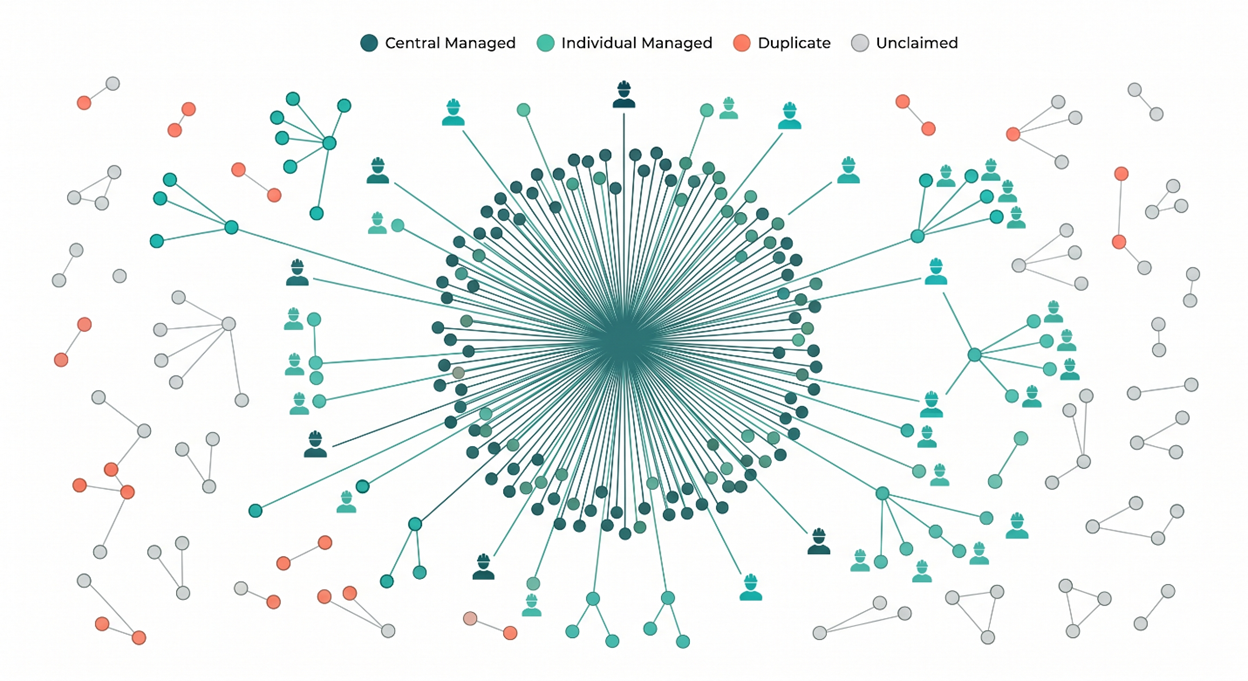
The argument franchisees often make is that they know their location best. And they’re right — that’s actually the whole point, and we’ll get to it. But knowing your location best doesn’t mean GBP management should live in isolation from the broader organization. The fix isn’t taking anything away from franchisees. It’s building a system where corporate has oversight and franchisees still have a meaningful role. Platforms like SOCi exist specifically for this. They give the franchisor visibility and control over NAP consistency and brand standards while giving franchisees a tool to add local content without going rogue. It’s not about control. It’s about not letting one unmonitored profile quietly become a customer experience problem at scale.
Have the hard conversation. Get access. The alternative is significantly worse.

2. 100 Locations, 100 Ways to Be Wrong
NAP consistency (name, address, phone number ) sounds like a basic checkbox. And it is, until you’re managing a brand with locations that have moved, rebranded, changed ownership, or launched before anyone had a listings strategy in place.
Here’s what we see constantly: a franchise goes through an acquisition or a rebrand, the website gets updated, maybe GBP gets updated, and everyone declares victory. Meanwhile, listings are sitting on Yelp, Apple Maps, Bing, and a dozen data aggregators still showing the old name, the old address, or a phone number that goes nowhere. These aren’t edge cases. They’re standard. And for a customer who finds one of those listings at the wrong moment, it’s a terrible experience. For search, it’s a trust signal problem.
With 100 locations, you have 100 opportunities for the wrong information to live somewhere on the internet. Multiply that across the number of platforms that list local businesses, and you start to understand the scope of it.
This is exactly why a listings management platform like SOCi isn’t optional for franchise brands at scale—it’s infrastructure. The manual approach doesn’t hold, and the “we’ll fix it when someone complains” approach means you’re always behind. Getting your listings into a managed system, doing a real audit of what’s out there (including the orphaned listings from closed locations that are still technically live), and building a repeatable process for updates is the kind of foundational work that pays off for years.

3. Reputation Management Gets Too Personal
This one is a little delicate, so we’ll say it nicely: franchisees should not be responding to negative reviews without guardrails.
It’s not because they’re bad at their jobs. It’s because it’s their business. Their name is on the door. When someone leaves a scathing review about a bad experience, it hits differently when you’ve poured your life into the place. We’ve seen responses that were defensive, responses that called out the reviewer by name (eeek!), even responses that shared details no business should ever share publicly (so embarrassing).
What often gets missed is that negative reviews aren’t just a reputation problem; they’re data. A pattern of complaints about wait times, a recurring staff issue, a menu item that keeps getting flagged—that’s intelligence the franchisor should be seeing and acting on before a local situation turns into a national one. The brands that handle reputation well have a system: positive reviews get handled efficiently, often with an AI-assisted response workflow. Negative reviews get human attention with some corporate oversight and a templated-but-personalized framework that keeps things on-brand and professional.
The franchisees doing best at this aren’t the ones responding from their cell phones while watching their kids’ soccer game. They’re the ones with a process and support from their franchise team.
4. Local Gets Sacrificed for Corporate Consistency
At the heart of most franchise local SEO struggles is a real tension: corporate needs consistency, franchisees need ownership. The brands that actually win at local search have figured out that these two things don’t have to be in conflict, but it requires being intentional about what corporate controls and what it doesn’t.
The pattern we see over and over: corporate builds a solid website, sets up templated location pages, and hands franchisees the keys. And then nothing happens. Not out of malice, but because a page with the right address, the right hours, and a stock photo doesn’t give anyone anything to work with. It could be any location, anywhere. There’s nothing local about it to build on, so franchisees disengage, and the pages sit there doing the bare minimum.
Here’s the thing: corporate can’t write that local content the way the local franchisee can. They don’t know the neighborhood, the regulars, the team, or what makes each location worth visiting over the one down the street. What they can do is build the structure that makes it easy for franchisees to show it. That means consistent layout and branding handled at the corporate level and NAP data managed through a platform so it’s always accurate and never left to a franchisee to update manually. What makes a great franchise website shine is the inclusion of a dedicated space for franchisees to add their own images, introduce their team, answer local FAQs, and reflect their community. And for the franchisees who really get into it, even local blogs. Give them the template and the guardrails, then get out of the way.
The franchisees who are genuinely engaged with their local pages consistently outperform the ones who are just placeholders on a location finder. Every time.
And linking to those location pages from GBP is non-negotiable. We have seen franchisees cut location pages to “simplify” their website and crater their local search performance in the process. A location list just doesn’t provide the local signals that a location page can.
5. GBP Posts and Schema Get Treated as Optional
Bring up GBP posts with almost any franchise client, and you’ll get the same response: “Does anyone actually look at those?”
Maybe not the way they look at an Instagram post. There are no likes or comments to validate the effort. But Google is paying attention, and that matters more than the vanity metrics. Consistent posts signal that a profile is active and that the business is engaged with its audience. They help Google understand a brand’s areas of expertise. And with AI Overviews now pulling more heavily from local signals, profile freshness is a real factor in whether a location surfaces when it should.
The other piece worth getting right is the local schema on your location pages. Schema markup that matches your GBP data (hours, address, phone, services) is how you make sure Google isn’t reconciling conflicting information across sources. For large orgs, it can feel like a lot of lift, but the alternative is Google making guesses. And Google’s guesses aren’t always your friend.
Better Organization, Better Systems, Better Local SEO. Every Time.
If there’s a common thread across all five of these mistakes, it’s that local SEO performance for franchise brands is largely a reflection of how well the organization is actually built to operate at a local level. The access battles, the listing chaos, the reputation misfires, the neglected location pages—none of these are purely search problems. They’re organizational structure problems that search makes visible.
That’s actually the good news, even if it doesn’t feel like it at first. Because the work required to get this right doesn’t just improve your search presence, it makes the organization run better. Franchisees are clearer on their roles. Brand standards are easier to maintain. Customer experience becomes more consistent across every location. Local SEO for franchises gets a whole lot more effective.
None of it is glamorous work. And because these are organizational problems as much as technical ones, they’re not always quick fixes. But compounded across 100, 200, 500 locations, getting the fundamentals right is the difference between a local search presence that works for you and one that’s quietly working against you.
If any of this sounds familiar—whether you’re in the middle of scaling or just starting to realize the foundation needs work—this is exactly the kind of problem we love to dig into. Let’s talk.