

Bottom Line Up Front: Restaurant Franchise Website Design
A restaurant franchise website has to do more work than almost any other multi-location site type. It’s carrying online ordering, per-location menus, delivery integrations, and local SEO for dozens or hundreds of markets, all while keeping the brand consistent from location to location. Most franchisors underestimate how much of this needs to be planned at the platform level, not fixed later.
- Restaurant franchise sites need to support live ordering and menu changes at the location level without breaking brand consistency
- The platform decision made early determines how much flexibility franchisors and franchisees have for years afterward
- Local SEO has to be built into the site architecture, not added as a follow-up project
- The right design firm has actually built multi-location restaurant sites before, not just single-location ones
Why Restaurant Franchise Websites Are Harder Than They Look
A single-location restaurant website is mostly a menu, some photos, and an ordering link. A franchise version of that same site has to handle all of it at scale, and scale changes the technical requirements completely.
Every location may run slightly different hours, offer regional menu items, or plug into a different delivery or POS integration depending on when they came on board or which vendor they use locally. The website needs an architecture that lets each location manage that detail without corporate rebuilding the whole site every time a franchisee changes their hours or a new delivery partner gets added.
At the same time, the brand still needs to look and feel identical from Boston to Boise. That tension — consistency at the brand level and flexibility at the location level — sits at the center of franchise marketing and website strategy generally, and it’s exactly where restaurant website builds tend to go wrong.
What to Look for in a Restaurant Franchise Website Design Firm
If you’re evaluating restaurant franchise website development partners for this kind of build, a few things separate agencies that can actually deliver from ones that will struggle once you’re past the first few locations.
Franchise expertise matters more than restaurant-world connections.
It’s tempting to look for an agency that’s deeply embedded in the restaurant industry, but the harder problem to solve isn’t restaurants; it’s distributed ownership. A restaurant franchise website development company that deeply understands franchise structure, the tension between corporate brand control and franchisee-level flexibility, how location rollouts actually work, and how to balance consistency with local customization will translate that understanding to a restaurant brand faster than a restaurant-focused shop will pick up franchise structure.
A platform built for multisite from the ground up, not retrofitted.
WordPress Multisite (or an equivalent architecture) lets corporate maintain brand control while giving individual locations the ability to manage their own hours, local promotions, and menu variations. Sites that weren’t built this way tend to require developer intervention for changes that should be self-service.
SEO built into the architecture, not planned as a separate project afterward.
Local SEO for a restaurant franchise depends heavily on how location pages, schema markup, and site structure are set up from the start. This is where franchise SEO and website strategy really can’t be separated. An agency that treats the website build and the SEO strategy as two separate projects handled by two separate teams usually produces a site that looks good and performs poorly.
A track record with active, growing brands, not just static portfolios.
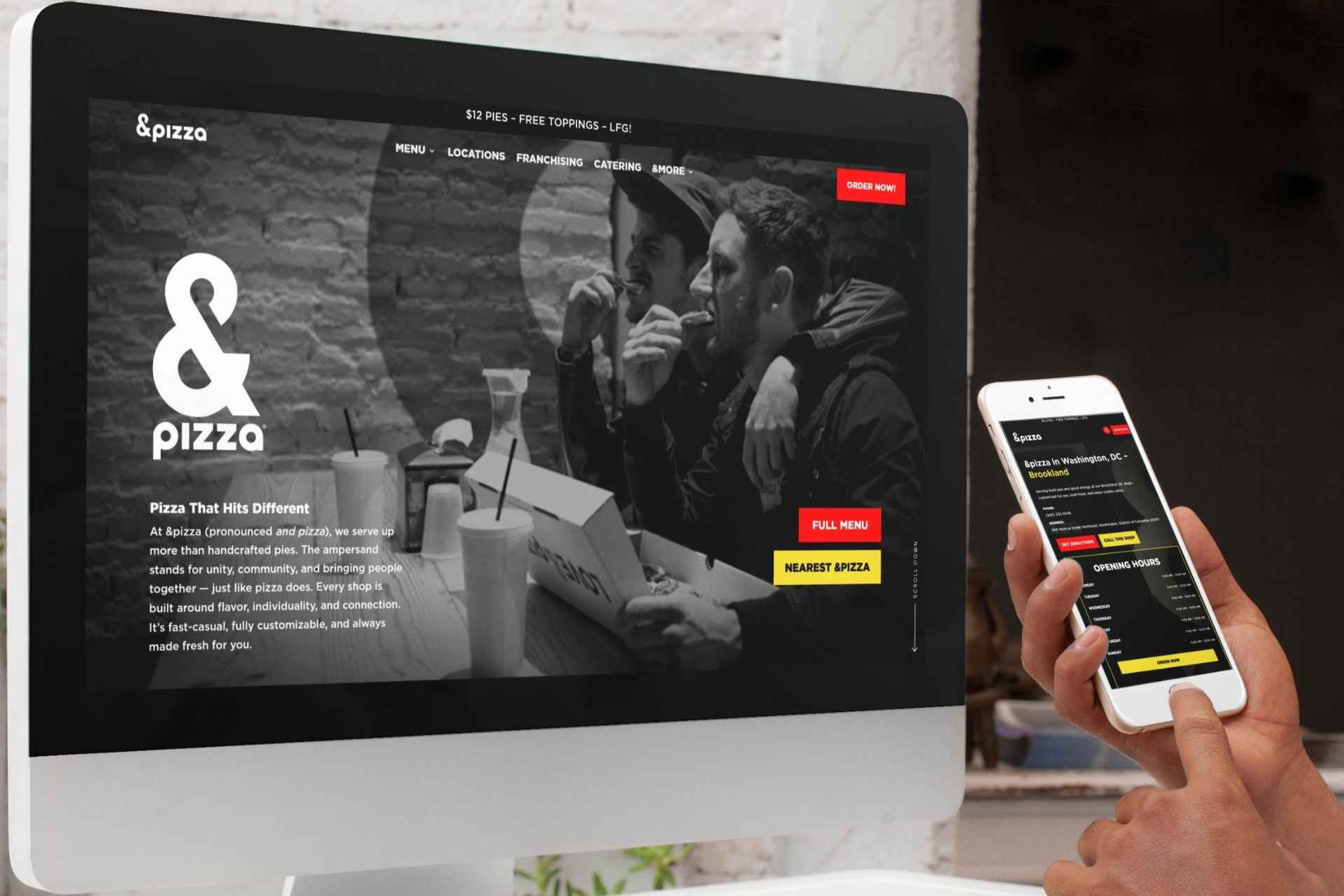
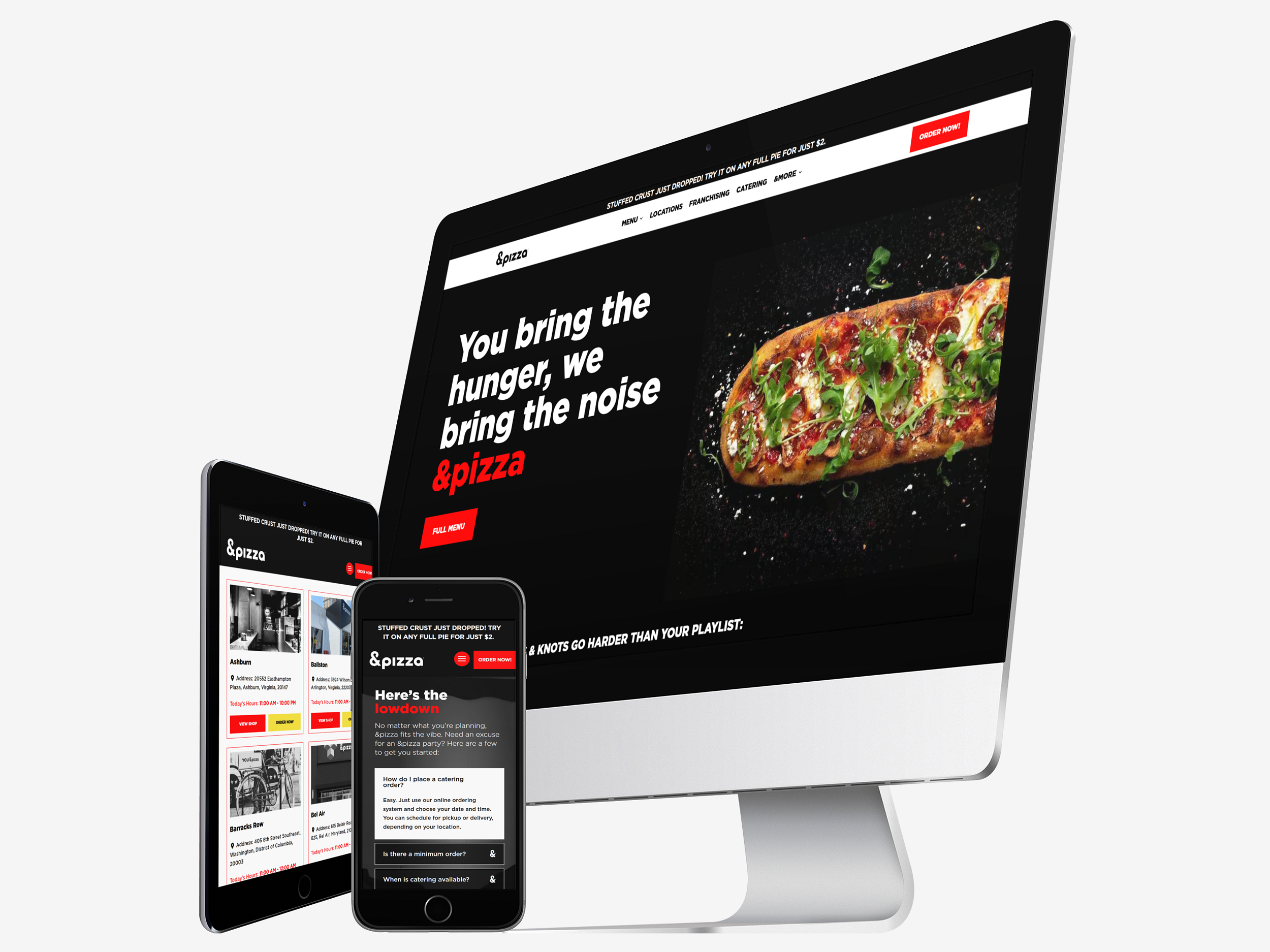
Ask how the company handles new location rollouts after launch. A restaurant franchise adding locations regularly needs a process for spinning up new location pages that doesn’t require a developer every time. We built &pizza’s website, now live at andpizza.com, with exactly this in mind: a scalable structure that supports new locations and ongoing updates without the team hitting technical bottlenecks every time the brand grows.
Honest answers about pricing and scope.
Restaurant franchise sites vary enormously in cost depending on location count, integration complexity, and how much franchisee-level customization is needed. A partner that gives you a flat number without asking detailed questions about your integrations and franchise structure hasn’t scoped the project correctly.

5 Core Features Every Restaurant Franchise Website Needs
- Location-level menu and hours management. Franchisees or regional managers need the ability to update their own menu items, pricing, and hours without waiting on corporate or a developer.
- Online ordering and delivery integration that scales. Whether that’s a native ordering system or integrations with third-party delivery platforms, this needs to work consistently across every location without a custom setup each time.

- A location finder and local pages built for search, not just navigation. Each location needs its own page with enough locally relevant content, and correct schema markup, to actually rank for local search terms, not just exist as an entry in a directory.
- Multisite or equivalent architecture for centralized control. Corporate needs the ability to push brand-wide updates (new promotions, design refreshes, policy changes) across every location at once, while still allowing local-level customization where it matters.
- A structure that holds up for AI-driven search, not just traditional search. As more discovery happens through AI tools rather than traditional search results, site structure and content clarity matter more, not less. A well-structured multi-location site is easier for both traditional search engines and AI systems to parse correctly.

What Most Franchisors Get Wrong
The most common mistake is treating the website as a one-time redesign project instead of ongoing infrastructure. Restaurant franchises grow, integrations change, and delivery partners come and go. A site built without room for that kind of change becomes outdated fast, and expensive to keep patching.
The second mistake is separating the website build from the SEO strategy. When these are handled by different teams working from different plans, the result is a site that looks right but was never actually structured to rank, and fixing that after launch is far more expensive than building it correctly the first time.
The third mistake is underestimating how much franchisee-level control matters. Franchisors who build a beautiful, tightly locked-down site often find franchisees frustrated that they can’t update basic details like hours or promotions without a support ticket. The best restaurant franchise sites strike a real balance: brand consistency where it counts, and self-service flexibility where it doesn’t.
FAQ: Restaurant Franchise Website Design
How is restaurant franchise website design different from a single-location restaurant site?
A single-location site mostly needs a menu, photos, and an ordering link. A franchise site needs to support that same experience at every location simultaneously, with per-location menus, hours, and integrations, while keeping brand presentation consistent across the network.
Do individual franchise locations need their own website, or does everyone use the corporate site?
Most restaurant franchises are better served by individual location pages within one unified site (built on a multisite architecture) rather than separate standalone sites per location. This keeps SEO authority consolidated under one domain while still giving each location its own findable page.
How long does it take to build a restaurant franchise website?
Timelines vary based on location count, integration complexity (ordering, delivery, POS), and how much franchisee-level customization is needed, but most multi-location restaurant builds take longer than a single-location site simply because of the number of systems that need to connect correctly.
Should a restaurant franchise website be optimized for AI search tools, not just Google?
Yes. AI tools pull from structured, clearly organized site content the same way search engines do, arguably more so, since they need to understand location-specific details without a human parsing the page. A site with clean location pages, accurate schema, and consistent structure is better positioned for both traditional search and AI-driven discovery.
What does a restaurant franchise website cost?
Cost depends heavily on location count, the complexity of your ordering and delivery integrations, and how much control you want franchisees to have at the local level. There’s no honest flat number without understanding those specifics first.
How Trebletree Can Help
We’ve built and scaled multi-location restaurant websites, including &pizza’s current site, with the ordering integrations, local SEO structure, and franchisee-level flexibility that this kind of build actually requires. Our franchise web design services are built specifically around this balance of brand consistency and local control, and if you want the bigger picture of how we think about franchise marketing overall, our franchise marketing page walks through the full approach.