


What Bookkeepers Need in a Website
- Your website needs to lead with the type of business owner you help, not a generic description of bookkeeping services. Specificity is your fastest trust-builder.
- A clear path to schedule a consultation or discovery call should be visible on every page. Tools like Calendly and Acuity integrate directly with WordPress and reduce the back-and-forth that loses leads.
- Service pages for monthly bookkeeping, catch-up bookkeeping, QuickBooks setup, and payroll rank better individually and speak more directly to each client’s specific situation.
- Industry-specific pages, bookkeeping for restaurants, contractors, or e-commerce, are a strong ranking and conversion play for bookkeepers who specialize.
- Trust signals, software certifications (QuickBooks ProAdvisor, Xero), years in business, and client testimonials should be visible without scrolling on the homepage.
A business owner searching for a bookkeeper is usually somewhere between mildly stressed and completely overwhelmed. Their books are behind, they don’t know where to start, and they need someone who clearly understands their type of business. Your website has a short window to communicate that you’re that person. If it doesn’t, they move on to the next result.
Here’s what actually makes a bookkeeper website work.

Why Websites Work Differently for Bookkeepers
Bookkeeping is a trust-intensive, ongoing service. A client who signs on isn’t buying a one-time deliverable. They’re entering a relationship where they hand over access to their financial records and depend on you to keep things accurate and current. The decision to reach out requires a certain level of confidence that you understand their business and won’t make things more confusing than they already are.
That trust has to start forming on your website before the first conversation happens. A generic bookkeeping website that could belong to anyone doesn’t do that job. A website that speaks directly to restaurant owners, or contractors, or e-commerce sellers, and describes exactly what you handle for them, earns that confidence immediately.
The recurring revenue model also matters for how you design the site. You’re not optimizing for one-time transactions. You’re converting a prospective client into a long-term engagement. The website experience, from the first impression to the consultation booking, should reflect the kind of organized, professional relationship you’re offering.
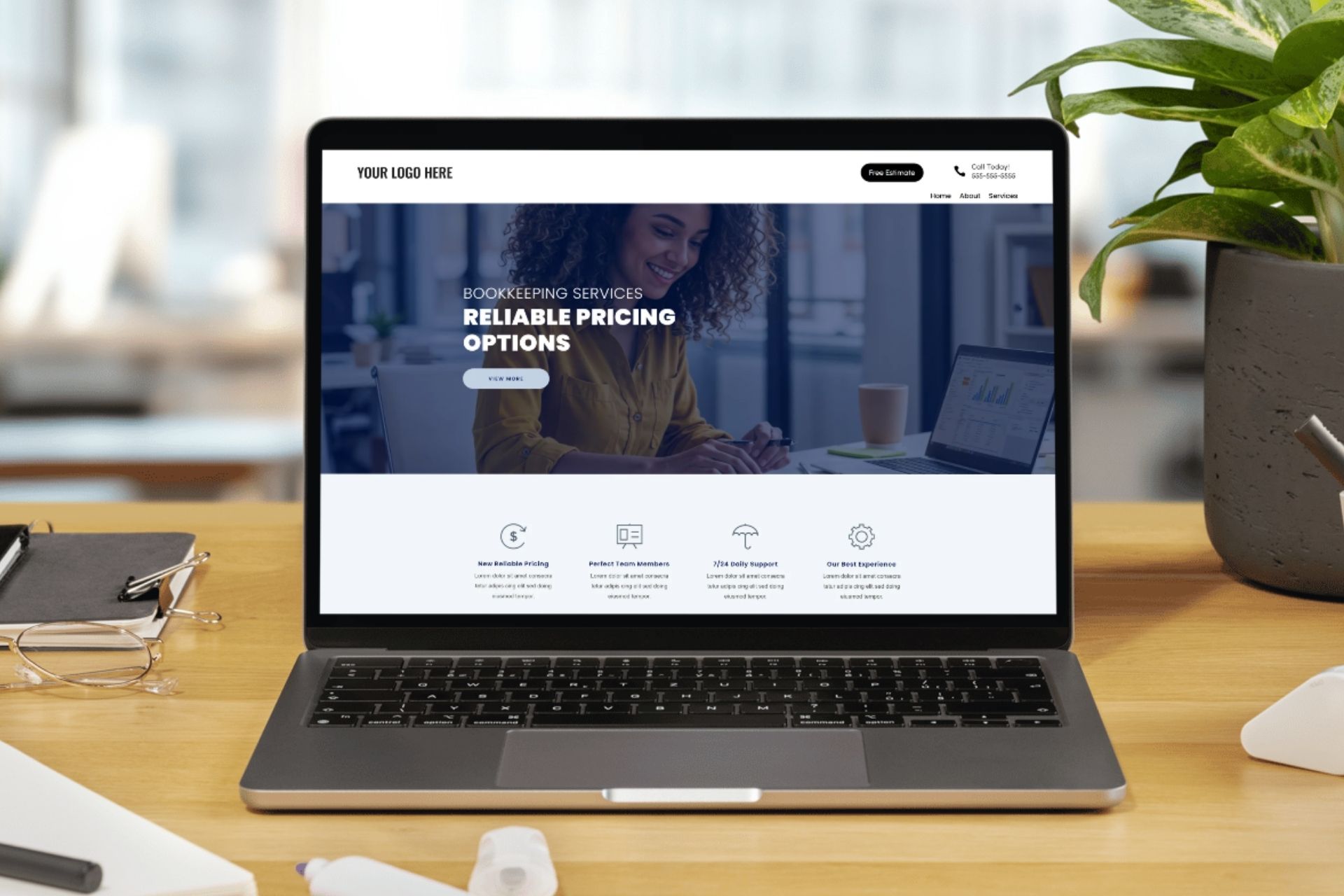
What the Best Bookkeeper Websites Include
A Homepage That Speaks to a Specific Client
The most common bookkeeper website mistake is leading with “we provide bookkeeping services for small businesses.” That describes everyone and resonates with no one. Lead instead with the specific type of client you know best: “bookkeeping for restaurants and food service businesses” or “financial clarity for contractors and trades.” The right client reads that and immediately feels like they’ve found the right local website for their situation.
A Consultation Booking Path on Every Page
Once a prospective client decides they’re interested, the path to booking a consultation needs to be immediate and frictionless. Tools like Calendly and Acuity integrate directly with WordPress, allow clients to see your availability, and let them schedule a call without a single email exchange. Put the booking link or embedded calendar in your header, on your homepage, and at the bottom of every service page. Remove every possible reason to put it off.
Service Pages That Match What Clients Search
Monthly bookkeeping, catch-up bookkeeping for clients who are behind, QuickBooks or Xero setup, payroll management, accounts payable and receivable: each of these is a distinct service with a distinct client in a distinct situation. A single “Services” page lumps them all together and ranks for none of them. A well-structured bookkeeper website gives each service its own page written for the person who needs that specific thing.
Industry Pages for Your Specialties
If you specialize in specific industries, and most good bookkeepers do, industry-specific pages are both a ranking opportunity and a conversion accelerator. A restaurant owner who lands on a page titled “Bookkeeping for Restaurants” feels immediately understood in a way they never would on a generic services page. Pair those pages with local SEO for bookkeepers that targets industry-specific searches and you’re capturing the most qualified traffic available.
Software Certifications and Trust Signals
QuickBooks ProAdvisor status, Xero certification, years in business, the number of clients you serve, any professional affiliations: these details belong on your homepage, not hidden in an About page. A business owner who is already anxious about their books wants to see immediately that you are credentialed and serious. A certification badge above the fold does more work than three paragraphs about your philosophy.
Testimonials That Describe the Before and After
A testimonial that says “working with them cleaned up three years of messy books and I finally understand my numbers” is worth ten generic five-star ratings. Ask satisfied long-term clients for specific, detailed testimonials that describe their situation before they hired you and what changed afterward. Place those testimonials near your consultation booking path where the decision is being made.
What Most Bookkeeper Websites Get Wrong
The most common problem is a website that describes the bookkeeper rather than serving the client. Long bio sections, lists of software proficiencies, a general overview of what bookkeeping is: none of this helps the overwhelmed business owner who landed on your site understand whether you can specifically help them. Restructure the content around the client’s situation, not your credentials.
The second mistake is making it too hard to take the next step. A contact form that requires filling out eight fields, or a “reach out and we’ll get back to you” message with no indication of how or when: both kill conversions. Replace them with an embedded scheduling tool that lets a prospect lock in a time immediately. The easier you make it to take that first step, the more often it gets taken.

How Trebletree Can Help
We build local websites for bookkeepers and professional service businesses that are structured to build trust quickly and convert the right clients. We also handle local SEO that drives qualified traffic to those sites so your website is working even when you’re with a client.
We start with a free audit: your Google presence, listings, reputation snapshot, and website, with your top three priorities clearly identified. No jargon, no 40-page report you’ll never read. See what’s included in our local business program
Frequently Asked Questions About Bookkeeper Websites
What should a bookkeeper’s website homepage include?
Your homepage should lead with the type of client you serve and the specific problem you solve, not a generic description of bookkeeping. Include your software certifications, a clear path to schedule a consultation, and two or three testimonials from clients who describe specific results. Keep it clean, specific, and easy to act on.
Should a bookkeeper have a blog on their website?
A small content library, even just a handful of posts answering questions business owners commonly search, does meaningful work for your local SEO and positions you as the knowledgeable resource before a prospective client ever reaches out. You don’t need to publish constantly. A few well-written posts on relevant topics, when to hire a bookkeeper, how to clean up QuickBooks, what to look for in a bookkeeper for your industry, build compounding search visibility over time.
What’s the best way to get more consultation requests from my website?
Embed a scheduling tool directly on your site rather than asking visitors to fill out a contact form and wait. Calendly and Acuity both integrate cleanly with WordPress and let prospects book a call in two clicks. Put the booking link in your navigation, on your homepage hero, and at the bottom of every service page. Reduce every possible friction point between “interested” and “booked.”