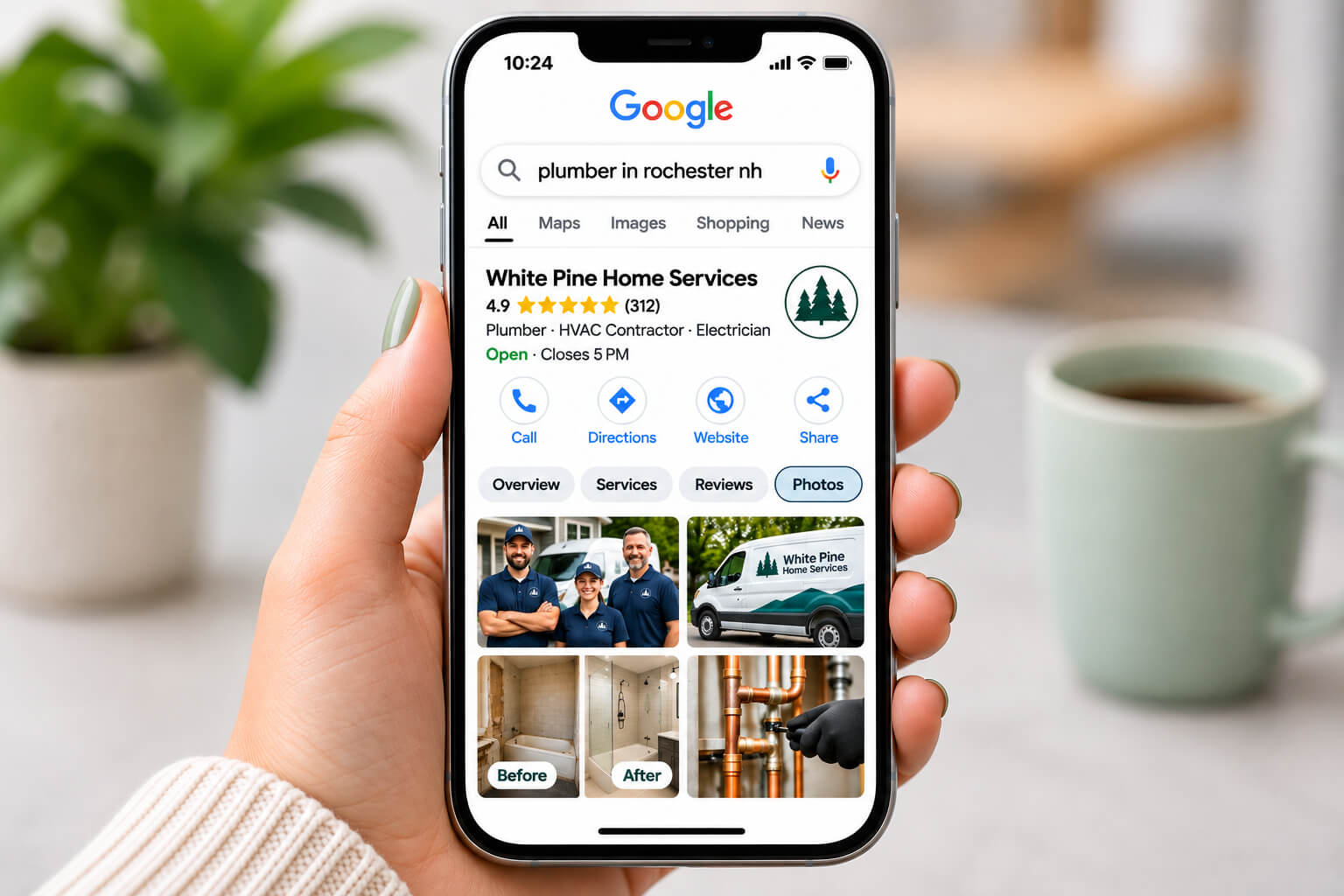

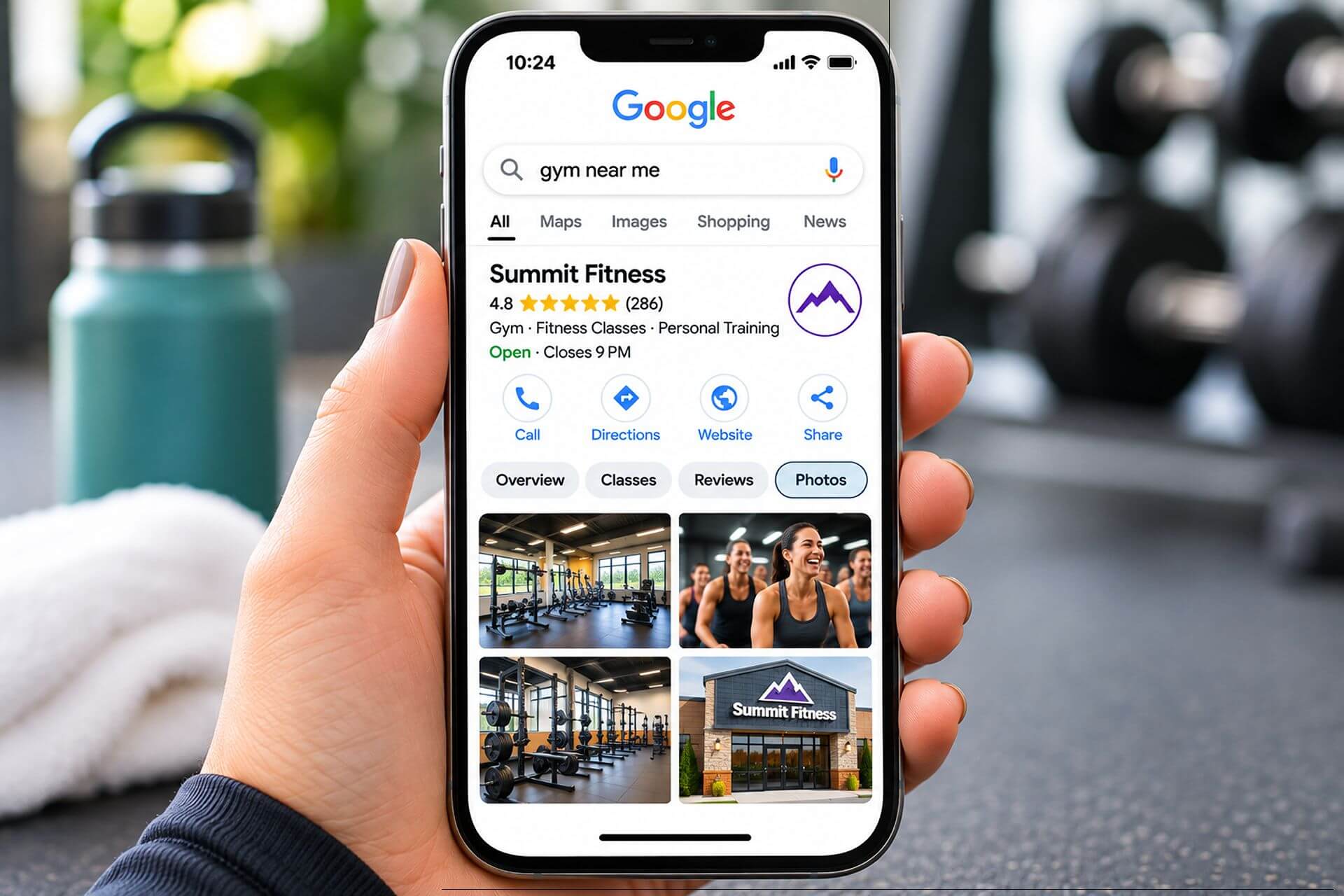
Article Summary
- Over 81 million Americans hold gym or studio memberships, and most of them found their gym through a local search
- Fitness and wellness businesses have unique GBP needs: class and service listings, amenity attributes, facility photos, and membership-driven review strategies
- The fundamentals (complete profile, consistent info, active reviews) still apply. For the full breakdown, see our GBP Optimization Guide. This article covers what’s different when you’re in fitness and wellness
- Whether you’re an independent yoga studio or managing 200 franchise locations, your GBP is how new members find you
The Fitness Discovery Problem
People don’t search for a gym the way they search for a restaurant. They’re not looking for something new every week. They’re looking once, signing up, and staying (ideally) for years. That means your Google Business Profile might only get one shot with a potential member, and it needs to work.
When someone searches “gym near me” or “yoga studio in [city],” the local pack is the first thing they see. If your profile is incomplete, your photos are from 2021, and your last review is six months old, you’re losing to the studio down the street that keeps theirs updated.
GBP signals account for 32% of local pack ranking factors, the single largest category. And 68% of consumers won’t consider a business with less than a 4-star average. For fitness businesses competing in a tight local radius, this is where new members come from.
If you’re new to marketing your fitness or wellness business online, our wellness marketing guide covers the full picture, from websites to SEO to paid media. GBP is one piece of that puzzle, but it’s the piece most businesses either skip or set up once and forget.
Get Your Categories Right
Your primary category determines which searches trigger your profile. This matters more than almost anything else on your listing.
Pick the most accurate primary category for what you actually are:
- Gym or Fitness Center for full-facility gyms
- Personal Trainer for one-on-one or small group training studios
- Yoga Studio, Pilates Studio, or Martial Arts School for specialty studios
- Wellness Center or Spa for recovery-focused or holistic businesses
- CrossFit Box, Boot Camp, or Gymnastics Center for specialty formats
Then add secondary categories for other services you offer. A gym with yoga classes and personal training might add “Yoga Studio” and “Personal Trainer” as secondaries. A wellness center offering massage and nutrition coaching could add “Massage Therapist” and “Nutritionist.”
Stick to what you genuinely provide. Google cross-references your categories with your reviews, website, and services section. A “Yoga Studio” category with no mention of yoga anywhere else on your profile raises flags.
For multi-location brands: Standardize primary categories across locations that offer the same core service, but let secondary categories flex based on what each location actually provides. A franchise gym that added a recovery suite at one location should reflect that on that location’s profile, even if the other 40 haven’t rolled it out yet.
Build Out Your Services Section
The Services tab is where you make your offerings searchable. Most fitness businesses leave this blank or list something vague like “fitness classes,” and that’s leaving visibility on the table.
List everything you offer as individual services:
- Personal training (1-on-1, small group)
- Specific class types: spin, HIIT, barre, hot yoga, kickboxing, Pilates reformer
- Specialty programs: prenatal fitness, senior fitness, youth athletics, adaptive fitness
- Recovery services: cryotherapy, infrared sauna, stretch therapy, sports massage
- Nutrition coaching or meal planning
- Body composition analysis or fitness assessments
Each service entry lets you add a description. Write these for the person searching, not for other trainers. “A 45-minute high-intensity interval class designed for all fitness levels” tells someone exactly what they’re signing up for.
Getting specific pays off. A studio that listed “Prenatal Pilates” as a service started showing up in searches they’d never appeared in before. The more specific you are, the more long-tail searches you capture.
For multi-location brands: Maintain a master services library at the brand level, then activate only the services each location offers. This keeps profiles consistent in format while reflecting what’s actually available. A franchise location that added a cold plunge shouldn’t be waiting on corporate to update the template.
Photos That Attract Members
Fitness is visual. Your photos are doing the work of a facility tour before someone ever walks through the door.
What to upload:
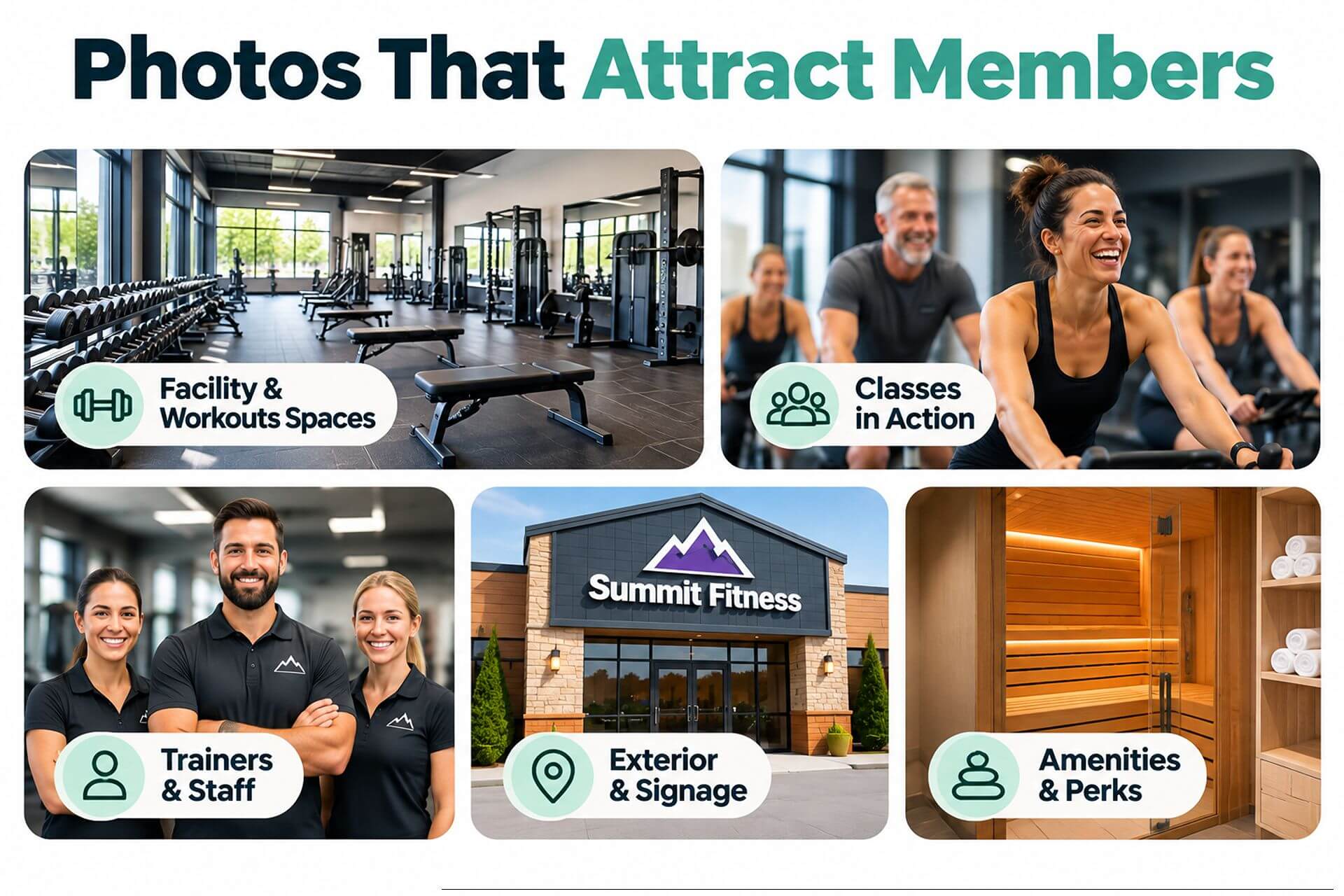
- Wide facility shots. Clean, well-lit photos of your main workout floor, studio spaces, locker rooms, and amenities. These answer the “what does it actually look like inside?” question.
- Classes in action. Real members (with their permission) in a group class, working with a trainer, or using equipment. Energy and community are what sell memberships, and these photos show both.
- Trainer and staff headshots. People want to know who they’ll be working with. Friendly, professional photos of your team build connection before the first visit.
- Exterior and signage. Especially important for new locations or studios in hard-to-find spots. Help people recognize the building when they show up.
- Amenity highlights. Sauna, smoothie bar, childcare area, recovery room. If it’s a selling point, photograph it.
Upload three to five new photos a month. Profiles with recent, high-quality photos get significantly more direction requests and website clicks than profiles with outdated or minimal imagery.
Use photos that accurately represent your business. Your actual facility, your actual members, and your actual equipment are what build trust. A phone photo of a packed Tuesday evening class is more convincing than a professional stock shot of a model on a Peloton.
For multi-location brands: Create a brand photography guide with lighting, angle, and branding standards, then equip each location to shoot their own photos. Monthly “content capture” sessions where a manager spends 15 minutes photographing the facility keep profiles fresh without requiring a professional photographer at every location.
Reviews Are Your Word-of-Mouth Engine
Fitness businesses live and die by referrals. In 2026, your Google reviews ARE your referrals. 96% of consumers are willing to leave a review when asked, and 74% only consider reviews from the last three months. Old reviews don’t just fade, they actively hurt you.
Best times to ask:
- After a member hits a milestone (100th class, one-year anniversary, a personal record)
- After a new member’s first week, when the excitement is highest
- After a standout class or training session
- During a check-in or progress review
How to make it easy:
- QR codes at the front desk linking directly to your Google review page
- A follow-up text or email after someone’s first visit or trial class
- Trainer-initiated asks after a great session (“Would you mind sharing that on Google? It helps us out more than you’d think”)
Responding well matters as much as collecting reviews. Thank the member by name, reference something specific (“so glad you’re loving the 6 AM spin class”), and keep it genuine. For negative reviews, acknowledge the concern, stay professional, and move the conversation offline. 89% of consumers expect businesses to reply to reviews, and your response tells every future member how you handle problems.
For multi-location brands: Track review metrics (volume, recency, average rating, response time) across every location as part of your operational dashboard. Set minimum targets, like five new reviews per month per location, and build asking into your member touchpoints. A templated response library helps location managers reply quickly while staying on brand, but leave room for personalization. A copy-paste reply on every review is almost as bad as no reply at all. For a deeper look at how franchise fitness brands should approach local visibility across locations, see our fitness and wellness franchise marketing guide.
Posts That Keep Your Profile Active
GBP posts expire after about seven days, so think of them as a rotating window display for your business. Fitness businesses have a natural advantage here because you always have something to promote.
Post ideas that work:
- New class launches or schedule changes
- Membership promotions, free trial offers, or seasonal specials
- Member spotlights or transformation stories (with permission)
- Trainer introductions or new certifications
- Event invitations: open houses, workshops, charity workouts, fitness challenges
- Seasonal content: New Year goal-setting, summer prep, back-to-school schedules, holiday hours
- Blog content teasers linking back to your website
Always include a photo and a call to action. “Book a free class,” “Sign up today,” or “Learn more” give people a clear next step. Posts without a CTA get seen but don’t drive action.
For multi-location brands: Build a monthly post calendar at the brand level with templated posts and approved imagery, but make it easy for locations to add their own. A franchise-wide promotion should go out to all locations. A local instructor spotlight should be posted by that location. The mix of brand consistency and local personality is what keeps profiles feeling human instead of corporate.
Attributes for Fitness and Wellness
GBP attributes vary by your specific primary category, so what’s available for a “Gym” won’t be identical to what shows up for a “Yoga Studio” or “Wellness Center.”
Log into your profile and check what’s actually available. Common attributes across fitness categories include:
- Wheelchair accessible (entrance, restrooms, parking)
- Offers online classes (if you do virtual sessions)
- Free Wi-Fi
- Gender-neutral restrooms
- Women-owned, veteran-owned, or other identity attributes
- Open 24 hours or extended hours (a real differentiator for gyms)
Don’t assume features you’ve seen on a competitor’s profile will show up on yours. The only way to know what’s available for your category is to look. Fill out everything that’s accurate, because these show up as search filters. When someone filters for “gyms open late near me,” only profiles with that attribute appear.
For multi-location brands: Audit attributes by location, not just by brand. Even within the same franchise, different locations may have different available attributes based on their category and what amenities they offer. A quarterly attribute check across all locations catches gaps before they cost you visibility.
Connect Your Booking
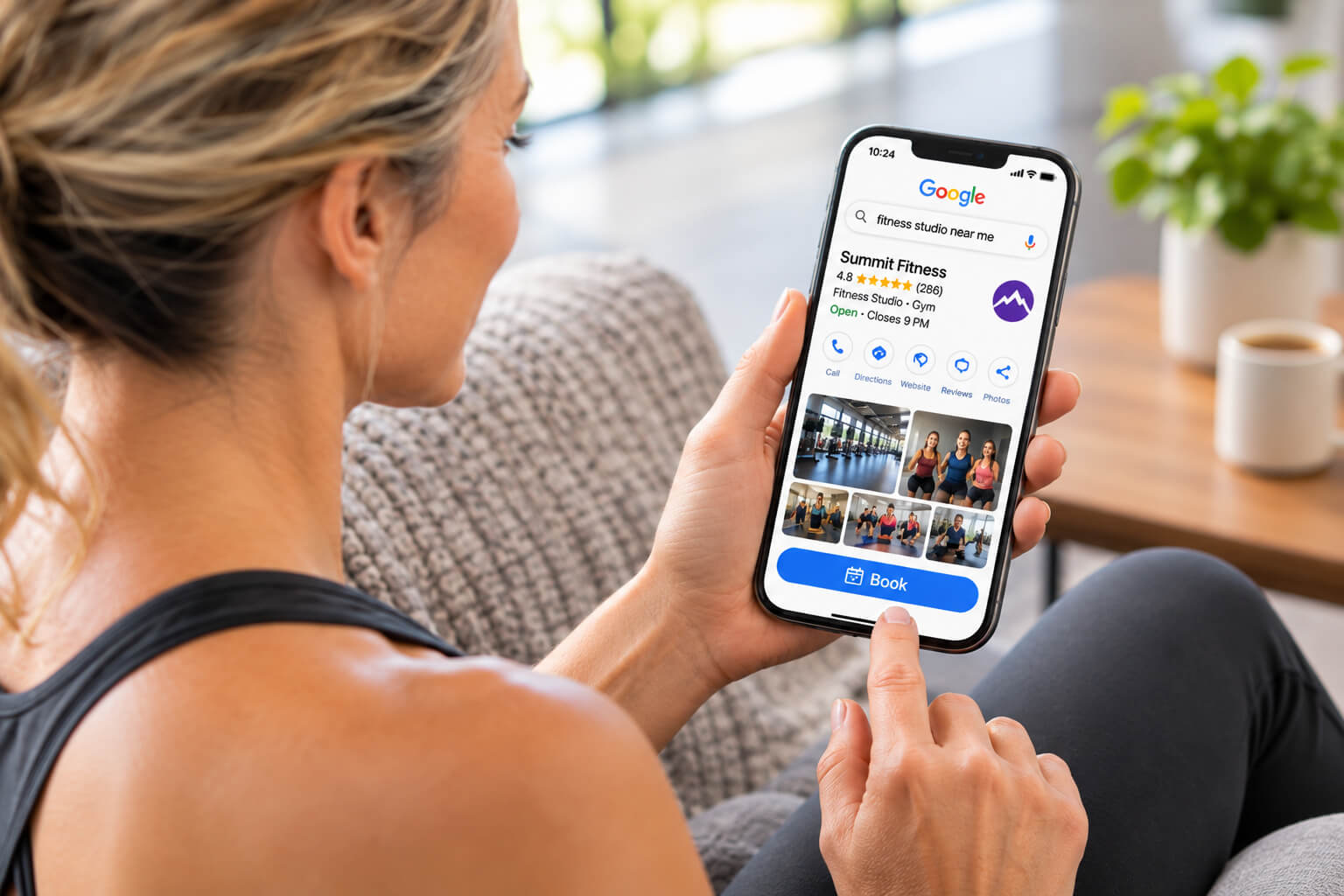
If your scheduling platform integrates with Google (Mindbody, ClassPass, Vagaro, and others offer direct integrations), connect it. The “Book” button on your GBP gives potential members a path from search to signed up without ever visiting your website.
If direct integration isn’t available, use the booking link field to point to your online schedule or trial class sign-up page. Make sure the landing page is mobile-friendly, because most people finding you on GBP are on their phone.
For multi-location brands: Standardize the booking integration across all locations. A potential member shouldn’t land on a national “find a location” page when they clicked “Book” on a specific location’s profile. Each profile should link to that location’s schedule or sign-up flow directly.
Keep Your Profile Working for You
Your GBP is not a launch-day task. It’s an ongoing channel that needs the same attention as your social media or email marketing.
Monthly check: Are your hours current (especially holiday hours and class schedule changes)? Have you uploaded recent photos? Are reviews being responded to within a few days? Are your services and attributes still accurate? Have you posted in the last two weeks?
For multi-location brands: Build a GBP health scorecard into your regular location reviews. Track completeness, review metrics, post frequency, and photo recency across every location. The data consistently shows that the locations with the best-maintained profiles are the ones generating the most new member inquiries from search.
For the full breakdown of GBP fundamentals that apply across every industry, read our GBP Optimization Guide. And if managing all of this sounds like one more thing your team doesn’t have bandwidth for, we work with local wellness businesses and franchise brands to keep this running so you can focus on your members.